How to Plan a Totodile Team in Scarlet and Violet
Plan a Totodile team in Scarlet and Violet using its weaknesses, evolution levels, documented moves, and teammate selection criteria.
On this page
If you're still looking for Totodile, the wild-catch route is available. To catch it, you'll need Pokémon Scarlet and Violet: The Indigo Disk DLC; Wild starter encounters (Totodile is a Water-type); and to reach the BB League club room where Drayton will introduce the club room computer donation system. Savanna Biome Pokémon can be upgraded with 3,000 BP — but you only need to upgrade one of them. For this particular route, you’ll need to find a Totodile at a swampy pool in the Savanna Biome. It costs 3,000 BP per biome, so upgrading your first savanna area should suffice.
Totodile’s Defensive Weaknesses and Role
The defensive weaknesses are straightforward: Totodile is a Water-type, and its typing gives it an added weakness to Grass and Electric attacks. This information alone is enough to make decisions about what partner(s) will best complement Totodile’s role. TypeChart team planner can help check if any potential partner will assist either matchup or change it entirely. But just checking their complete typing tells us little about whether they’re useful, as well as the weaknesses that would remain across the entire team.
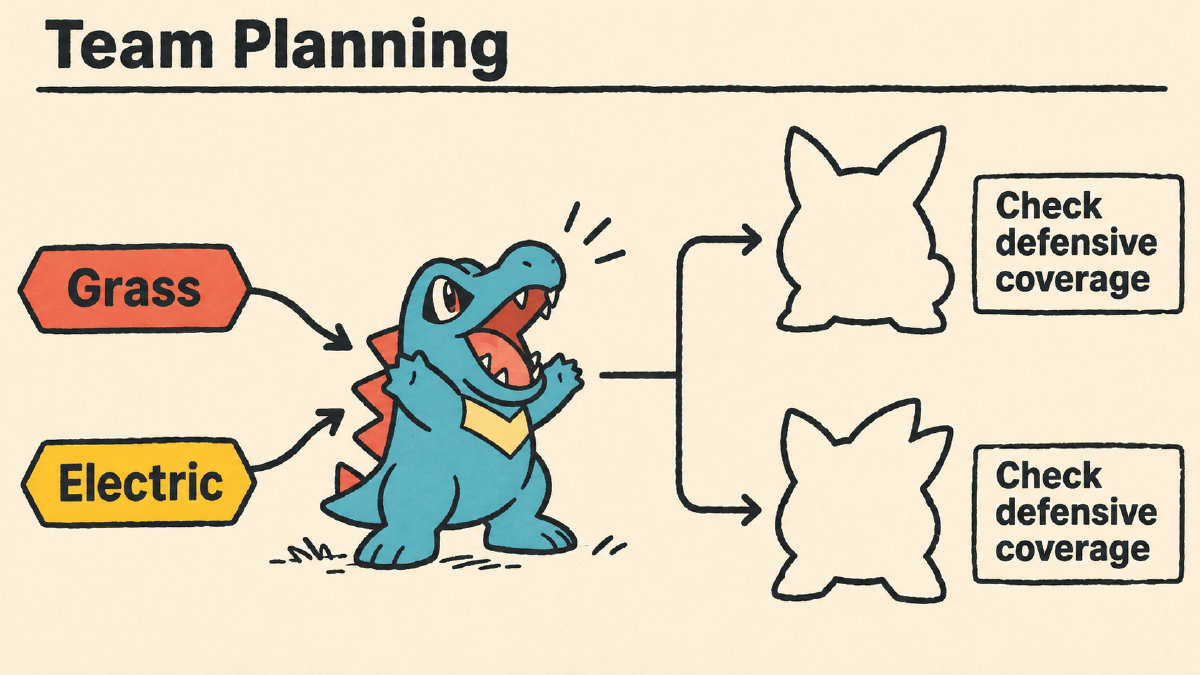
In terms of how we should think about these choices, it depends on what type of role we expect Totodile to take. While there are some generalizations that can be made, I recommend considering each choice based on the documentation rather than gameplay experience. Typing checks may give a limited assessment of battle performance, but a favorable type relationship alone doesn’t guarantee that your Totodile will have a safe switch-in, nor does it necessarily mean that the rest of your team is free from weaknesses.
I don't believe the base-stat comparison supports building a physical attacking plan, though choosing a nature that prioritizes physical damage while lowering special stats may be a conditional fit. As such, it’s not possible to choose a nature unless the chosen moveset also includes a preference for physical damage over special.
Evolution and Defensive Priorities
You may be wondering why I chose to focus on the “Ordinary” Totodile for this analysis. After all, isn’t the evolution path worth noting? That’s a great question. When considering what form of Totodile we’re analyzing, it helps to consider what makes an ideal partner: which evolves into what? And what are the advantages and disadvantages of each?
The answer is simple: evolution preserves the basic defensive priorities. Totodile evolves into Croconaw at level 18, followed by Feraligatr at level 30. All three remain Water-type. In other words, the same defensive strategies and considerations apply whether you’re playing as Totodile, Croconaw, or Feraligatr. What evolves is your ability to learn new moves and adjust your strategy accordingly.
Attacking Options and Coverage
Let’s begin by comparing Totodile’s documented attacking options against the intended opponents. Obviously, coverage is an important consideration here. However, there are two different ways to consider this. Coverage choices allow Totodile to attack with a greater range of types, but they may not change its overall defensive matchups. Likewise, changes to its offensive matchup may require additional considerations in terms of coverage, too. So we need to evaluate each possibility carefully.
What Moves Does Totodile Know?
The following list contains the moves that Totodile can learn. It also includes any specific notes about the move, such as level-up availability or which item needs to be held.
Ice Fang (Ice-type): Learned at level 19
TM055 Dig (Ground-type)
TM069 Ice Punch (Ice-type)
TM077 Waterfall (Water-type)
TM0110 Liquidation (Water-type)
Because of the variety of enemies you might face, your move choices will be affected by whom you’re trying to beat. A good starting point is to ask yourself who you want to use your Totodile against. Once that’s decided, the rest of your strategy can follow suit.
While coverage moves like Ice Fang can broaden Totodile’s effectiveness, they won’t change its defensive weaknesses. Therefore, when evaluating coverage, we must remember that Totodile’s defensive weaknesses remain intact.
Ultimately, the only thing that matters is what’s documented. There isn’t a universally best moveset to play with Totodile. It’s simply up to what you prefer and what you feel works best.
Why Build a Physical Attacking Plan?
Totodile base Attack (65) versus Special Attack (44) suggests that a physical build could be considered, assuming the movepool allows it. You can choose a nature that raises Attack while lowering Special Attack (such as Adamant), or vice versa. This way, Totodile’s physical strength is increased while reducing its reliance on Special Attacks.
However, base-stat comparisons alone aren’t sufficient to establish an optimal set. Your selected moveset plays an equally important role in shaping Totodile’s effectiveness.
Sources
Check your team
Explore type matchups and compare shared weaknesses.
Open team builder →